Investing
Car Wash Real Estate: A Simple Way to Pair Strong Cash Flow With Big First-Year Tax Write-Offs
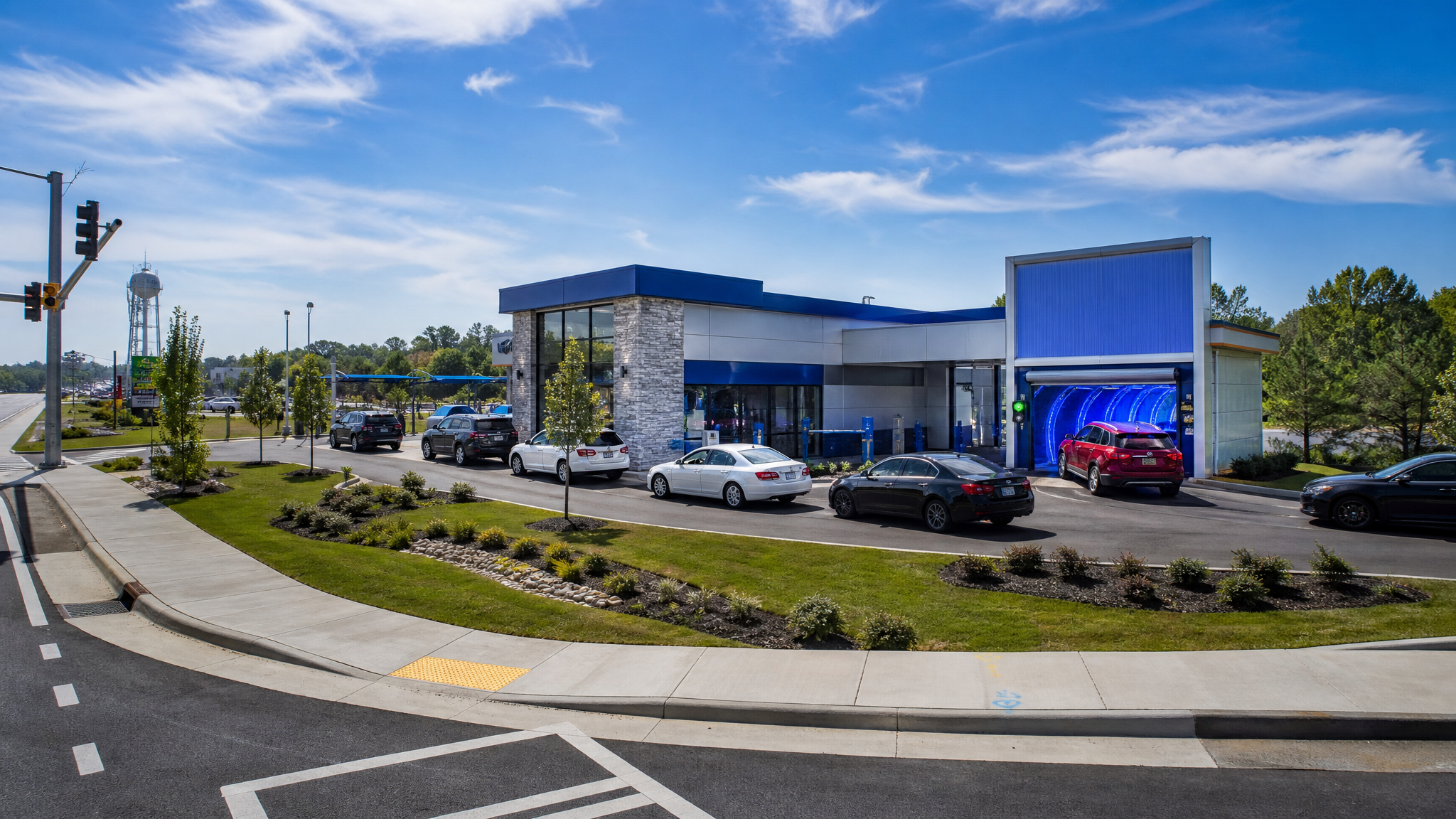
Car washes are suddenly everywhere. Investors who used to ignore them are now competing with private equity funds to buy the dirt under modern express wash sites. What changed is not just consumer behavior - it is the combination of subscription-style cash flow, niche real estate, and unusually favorable tax treatment when you structure the investment correctly.
This article is written for independent investors who want to understand the opportunity in car wash real estate without becoming full-time operators. It is not tax or legal advice, but it will give you a framework to decide whether this niche belongs in your portfolio and how to approach it thoughtfully.
Why Car Washes Are Suddenly Interesting
Over the last decade, the U.S. car wash and auto detailing industry has grown into a mid-teens to high-teens billion-dollar market, supported by a shift away from home washing and toward professional, automated tunnels. Consumers like convenience, and monthly unlimited wash memberships mean recurring revenue rather than purely one-off tickets.
At the same time, institutional capital has discovered the space. Private equity groups have been rolling up operators, building regional brands, and separating the operating businesses from the underlying real estate. For independent investors, that creates two distinct opportunities: own the business, own the dirt, or participate in both via separate entities.
The Real Estate, Not Just the Soap
You do not have to run a car wash to invest in car wash real estate. Many modern express wash sites are structured like other single-tenant net-lease (STNL) properties, where an operator signs a long-term lease and takes responsibility for most or all operating expenses.
The basic real estate thesis looks like this: well-located car wash sites offer strong visibility, high traffic counts, and simple, repeatable use on parcels that also retain value for other future uses - fuel, convenience, quick-service food, or small retail - if the wash use ever changes. Investors who buy the land and improvements can receive steady rent while allowing an experienced operator to handle chemicals, labor, and day-to-day operations.
Typical Site Characteristics
Most modern express washes share a few real estate traits:
- 1.0-2.0 acre sites on or near a signalized corner.
- Strong traffic counts on the primary road and easy ingress/egress.
- Good sight lines; drivers can see the wash and its queue well in advance.
- Proximity to complementary uses like gas stations, grocery anchors, and big-box retail.
These attributes matter both for the car wash business and for the residual land value if a future buyer wants a different use.
How Car Wash Investments Are Structured
From the independent investor's perspective, you will usually see three broad structures:
- Lease-back from an existing operator. An operator who owns their real estate sells it to you and signs a long-term lease. You own the real estate; they continue to run the business and pay rent.
- PropCo / OpCo split. You and partners form one entity to own the real estate - PropCo - and another to operate the business - OpCo. Each entity has its own capital structure and investors; OpCo pays rent to PropCo.
- Developer or PE-driven sale. A developer or private equity group builds or acquires car washes, stabilizes them, and then sells off the real estate in individual or portfolio transactions while keeping or selling the operating companies.
In all three cases, your job as the real estate investor is to underwrite the dirt, the improvements, and the lease just as you would with any specialized commercial property. The difference is that the tax treatment of a car wash's improvements can be much more favorable than a plain vanilla building.
The Tax Angle in Plain English
Car wash real estate stands out because a large portion of your purchase price can often be depreciated very quickly. The tax code treats land as non-depreciable, but it allows you to depreciate buildings and certain improvements over time, with bonus depreciation and Section 179 speeding that process up in many cases.
Where a generic office or retail building might have 39-year depreciation on most of its cost, car washes typically have a much higher share of their value in equipment, specialized plumbing and electrical, paving, and other components with shorter depreciable lives. Those components can often be identified in a cost segregation study and placed in 5-, 7-, or 15-year buckets, many of which qualify for bonus depreciation under current rules.
Specialized tax advisors and cost segregation firms routinely highlight car washes as one of the most favorable property types when it comes to accelerated write-offs. They point out that, with proper studies and structuring, investors can sometimes deduct a very high percentage of improvement costs in the first year, creating large paper losses that may offset other income for eligible taxpayers.
Bonus Depreciation and Section 179 in 2026
Under current IRS guidance, 100% bonus depreciation is available for eligible property acquired after January 19, 2025 — a meaningful acceleration for short-life property, especially when paired with Section 179 expensing for eligible taxpayers.
Key concepts to understand:
- Bonus depreciation allows you to deduct a large percentage of the cost of qualifying property in the year it is placed in service, subject to phase-down schedules and other limitations.
- Section 179 allows businesses to expense the full purchase price of certain qualifying property up to annual limits and phase-outs based on total investment levels.
- Cost segregation studies break your property into components, identifying which costs can be placed into shorter-life categories that qualify for bonus and/or Section 179 treatment.
Combining these tools is where car wash real estate becomes particularly interesting: because so much of a car wash's total cost is in equipment and improvements that fall into shorter categories, the first-year deduction can be very large relative to your cash equity.
None of this is automatic. It requires professional cost segregation work, careful basis allocation between land and improvements, and tax guidance tailored to your situation. Aggressive assumptions can attract scrutiny, so it is important to treat published examples as illustrative rather than guarantees.
A Simplified Example (Conceptual Only)
Imagine an investor purchases a stabilized express car wash for a price where land, building, and equipment values are clearly supported. Tax advisors and industry sources show conceptual examples where:
- A substantial portion of the purchase price is allocated to improvements and equipment rather than land.
- A cost segregation study identifies a large share of those improvements as 5-, 7-, or 15-year property.
- Bonus depreciation and Section 179 are applied where available.
In these hypothetical scenarios, investors may claim very large first-year depreciation deductions relative to their cash equity, resulting in significant paper losses that can help shelter other income if they materially participate or qualify under passive loss rules.
Again, these are conceptual patterns reported by advisors and sponsors, not promises. Your actual numbers will depend on purchase structure, land allocation, tax law at the time, and your personal situation.
How to Underwrite a Car Wash as Real Estate
Even with strong tax benefits, you should underwrite the deal like any other investment. Tax advantages amplify a sound deal; they do not fix a weak one.
1. Location and Trade Area
Start with the basics:
- Traffic counts: Higher counts on the primary road generally support better volumes, but pay attention to turning patterns and nearby intersections.
- Competition: How many modern tunnels are within a 3- to 5-mile radius? Are there older in-bay automatics that might be vulnerable to a new express competitor?
- Demographics: Density, median income, and vehicle ownership patterns in the surrounding trade area all matter.
Industry publications note that some markets are already seeing signs of saturation, with concerns about too many new washes chasing the same customer base. Independent investors should be cautious about buying in areas where three or four new sites have opened in a short period.
2. The Lease and Tenant
If you are buying a property with an existing tenant:
- Lease term and options: Longer base terms with clearly defined renewal options are generally preferable.
- Rent escalations: Fixed percentage bumps or index-linked escalations help your income keep pace with inflation.
- Guarantees: Understand whether the tenant is a single-site operator, a regional group, or a well-capitalized PE-backed platform, and what guarantees back the lease.
If you are participating in a PropCo / OpCo structure, take time to understand the operator's business plan. A strong operator with a clear membership strategy is as important as a good corner.
3. Operating Performance and Stress Testing
Even as a real estate investor, you should review high-level operating metrics:
- Volume: Average daily cars and seasonality.
- Memberships: Percentage of revenue from recurring subscriptions versus one-off washes.
- Revenue per car: The mix of basic versus premium packages.
Ask how the business would perform under stress: What happens if volume drops by 20%? If water or utility costs spike? If a competitor opens down the road? Industry commentators increasingly warn that assuming straight-line growth without stress testing is a mistake in today's build-heavy environment.
4. Environmental and Regulatory Considerations
Car washes are water-intensive, and municipalities are paying closer attention to both water usage and wastewater discharge. Before you commit capital, ask:
- Are there any outstanding environmental studies or concerns?
- What are local rules around water recycling, stormwater management, and chemical handling?
- Could future restrictions materially affect the site's value or operating costs?
From a zoning standpoint, make sure you understand both current approvals and what alternative uses might be allowed if the site is ever redeveloped.
Comparing Car Wash Dirt to Other Niche CRE
It can be helpful to situate car wash real estate next to other specialized assets you might consider.
- Self-storage: Also benefits from cost segregation and bonus depreciation, but often has more moving parts operationally and more direct competition in many markets.
- Quick-service restaurant / drive-thru: Leases can be strong but buildings typically have more of their cost in long-life shell, so first-year depreciation may be less dramatic as a percentage of total price.
- Fuel and convenience: Attractive for some investors but come with their own environmental and regulatory complexities.
Advisors who specialize in tax savings for building owners consistently highlight car washes as being near the top of the list for accelerated depreciation potential, with self-storage and certain medical or industrial properties also ranking well.
Who This Strategy Is (and Is Not) For
Car wash real estate can be powerful, but it is not for everyone.
It tends to suit:
- High-income investors in need of large, front-loaded deductions and willing to work with sophisticated tax and legal advisors.
- Experienced real estate owners looking to move beyond small residential into niche commercial assets.
- Investors comfortable with single-tenant risk in exchange for targeted yield and tax planning.
It is less suitable for:
- Investors who cannot use large paper losses because of passive activity limitations or low taxable income.
- Those who are very risk-averse and prefer diversified, multi-tenant properties.
- Anyone unwilling to dig into the regulatory and environmental details of their specific site.
Industry sources also caution that growth, while strong, is not infinite. Trade groups and analysts note signs of slowing momentum in some submarkets and advise operators and owners to be disciplined rather than assuming that car washes always win.
Bringing It All Together
Car wash real estate sits at the intersection of durable consumer demand, specialized dirt, and unusually favorable tax mechanics when structured well. That combination explains why institutional capital, family offices, and high-net-worth individuals are paying close attention - even as headlines warn about overbuilding and local saturation.
For independent investors, the opportunity is not to blindly follow the crowd, but to understand the underlying mechanics: the location, the lease, the operator, and the tax structure. With those pieces in place - and with the right professional guidance - a single, well-chosen car wash property can meaningfully change both your cash flow and your tax picture over the next few years.
Succession Holding LLC publishes independent real estate education and market analysis. Nothing in this article constitutes investment advice or a recommendation to buy or sell any asset.